
Travelling to or from Birmingham Airport does not have to involve the uncertainty of finding a taxi, waiting for public transport or dealing with airport parking. For business travellers, corporate guests, and private passengers who value comfort and punctuality, a pre-booked executive airport transfer in Birmingham service provides a more organised way to manage the airport journey.
With the right planning, your airport transfer can become one of the easiest parts of your trip. From choosing the right vehicle and confirming your pickup details to allowing enough time for traffic and airport procedures, a professional chauffeur service can help make the journey smoother from door to terminal.
At Link Executive Transfers, we provide chauffeur-driven executive travel from Birmingham and across the West Midlands, with airport transfers forming an important part of our service. Whether you are travelling from Birmingham city centre, a nearby business district, a hotel, or a residential address, the aim is simple: provide a comfortable and professionally managed journey to or from the airport.
What Is an Executive Airport Transfer in Birmingham?
An executive airport transfer is a pre-booked private journey operated by a professional chauffeur in an executive vehicle. Rather than arranging transport after arriving at the airport or relying on last-minute availability, you organize your journey in advance around your flight and travel requirements.
An executive airport transfer from Birmingham service can be particularly useful for:
- Business travelers attending meetings or conferences
- Corporate clients and visiting executives
- Passengers travelling with important luggage
- Families looking for a comfortable private journey
- VIP and private clients who value discretion
- Travellers who prefer a door-to-door service
- Passengers making early-morning or late-night airport journeys
For executive travel, the journey is about more than getting from A to B. Professional communication, timing, comfort, vehicle presentation, and a well-organized pickup can all make a difference.
Why Pre-Book Your Birmingham Airport Transfer?
Airport travel involves several variables. Traffic conditions, check-in requirements, luggage, roadworks, and flight schedules can all affect your plans. Pre-booking your Birmingham airport transfer allows you to organise the transport element before travel day.
A pre-booked journey can give you a clear pickup arrangement and allow the chauffeur service to prepare around your itinerary.
For departing passengers, the objective is to leave enough time to reach Birmingham Airport without creating unnecessary last-minute pressure. For arriving passengers, having a planned airport pickup means you already have transport arrangements in place when you leave the terminal.
Birmingham Airport itself recommends checking airline-specific information for your flight and provides live arrival and departure information, making flight planning an important part of the overall airport journey.
How to Book an Executive Airport Transfer in Birmingham
Booking your executive airport transfer booking for the Birmingham service should be straightforward. Before submitting a booking request, have the essential journey information available.
1. Confirm Your Pickup Location
Provide the complete pickup address, including the postcode where possible.
This could be:
- Birmingham city center
- Birmingham Business Park
- A Birmingham hotel
- A private residence
- An office or corporate address
- A location elsewhere in the West Midlands
Accurate pickup information helps the chauffeur service plan the journey correctly.
2. Provide Your Airport and Flight Details
For an airport journey, provide the airport, flight number, and scheduled arrival or departure time.
For an arrival pickup, your flight number is particularly useful because it helps the chauffeur service understand the expected arrival information and plan the collection accordingly.
3. Choose the Appropriate Vehicle
Consider the number of passengers and the amount of luggage you will carry.
For an individual executive traveller, a premium executive saloon may be suitable. For several passengers or additional luggage, a larger executive vehicle may be more appropriate.
Link Executive Transfers’ Birmingham chauffeur service includes executive vehicle options such as Mercedes-Benz E-Class, S-Class, and V-Class vehicles, subject to availability and the requirements of the booking.
4. Confirm the Journey Type
Let the chauffeur company know whether you require:
- Airport pickup
- Airport drop-off
- A return airport transfer
- A one-way journey
- Corporate travel alongside an airport transfer
- Additional waiting or travel requirements
Providing these details in advance helps ensure the booking reflects your actual itinerary.
5. Check the Booking Confirmation
Before travelling, check the confirmation carefully.
Your confirmation should correspond with your:
- Pickup address
- Destination
- Date
- Pickup time
- Passenger numbers
- Vehicle requirements
- Flight details, where applicable
- Special requirements
Good airport travel planning starts before the day of departure.
Birmingham Airport Pickup: What Should You Know
For passengers arriving at Birmingham Airport, the pickup process is an important part of the transfer experience.
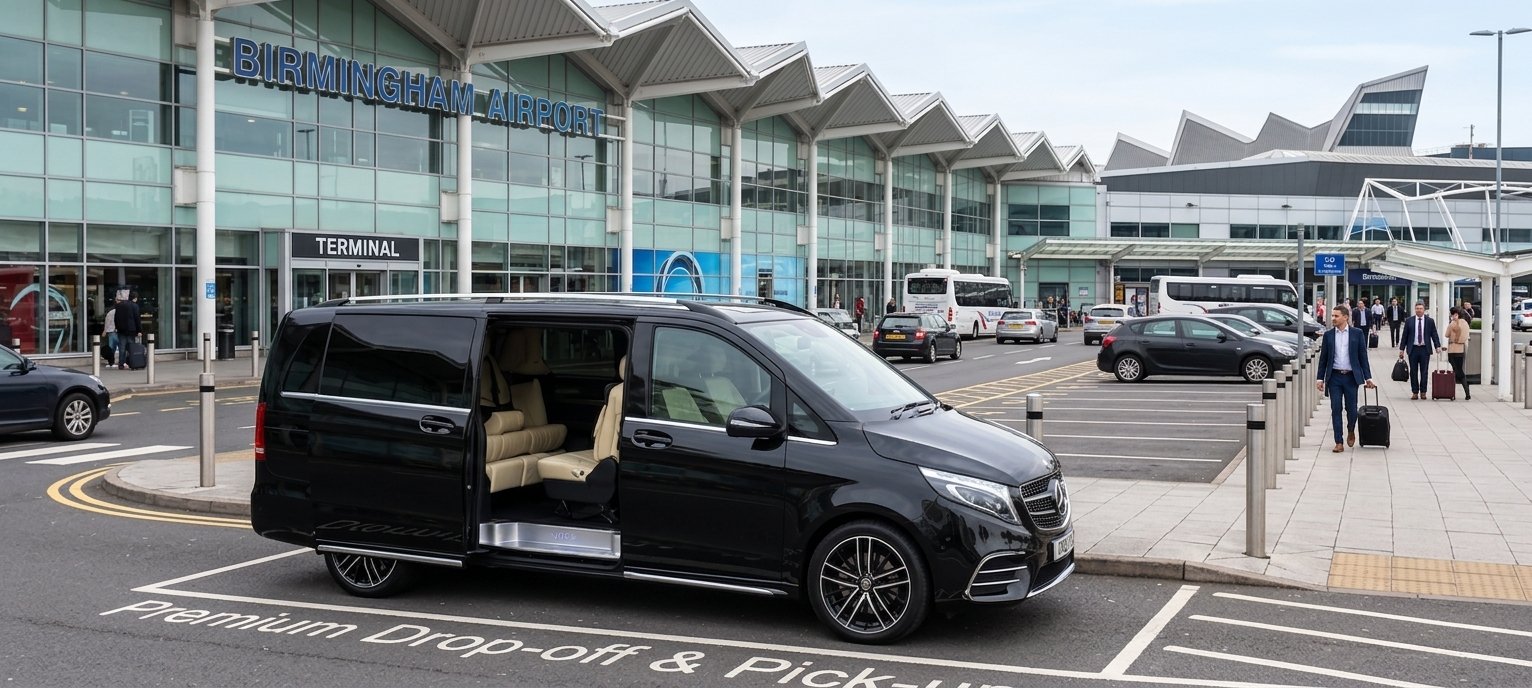
Birmingham Airport provides specific arrangements for passenger collections. Its official guidance recommends Car Park 5 for those collecting passengers and states that Premium Set Down is intended for rapid drop-off rather than passenger collection.
Airport rules and pickup arrangements can change, so passengers should always follow the latest airport instructions and their chauffeur’s collection information.
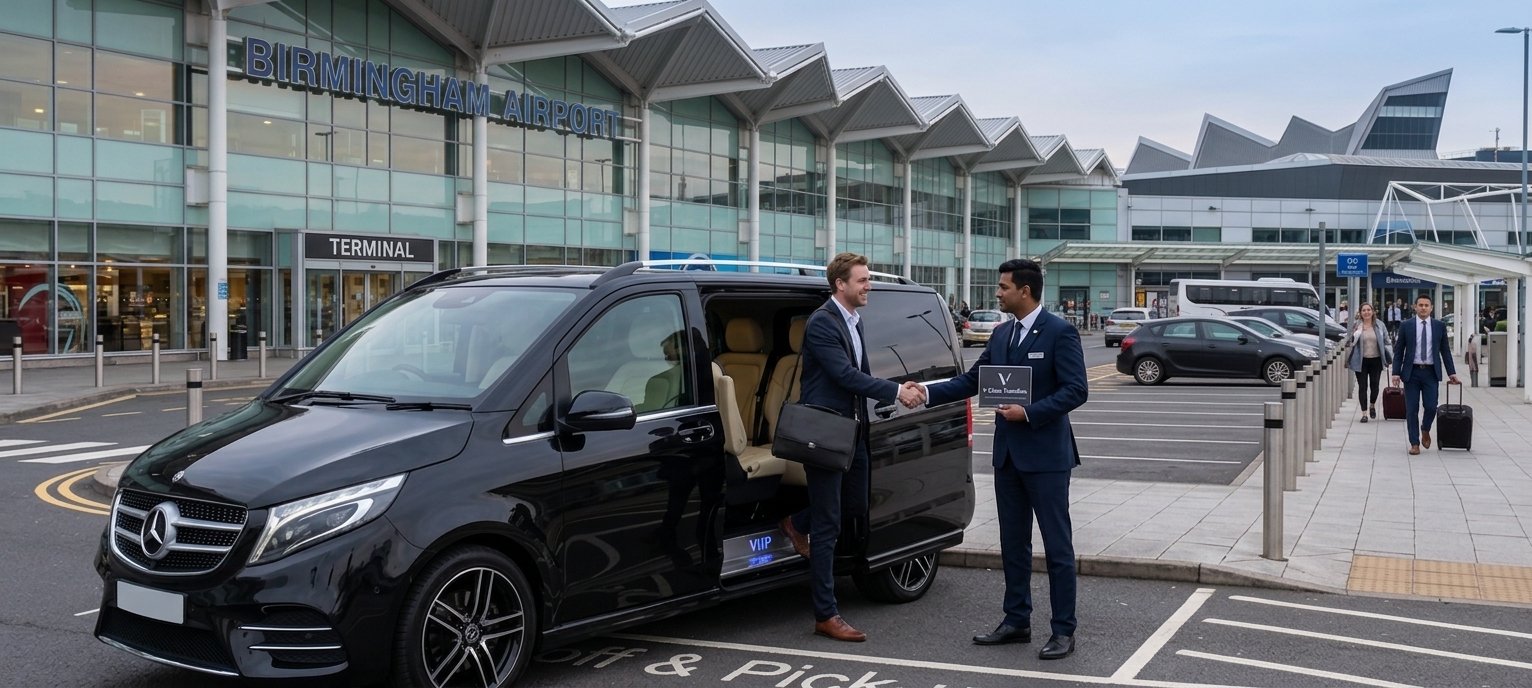
A professional Birmingham airport chauffeur service should make the collection process as clear as possible. Depending on the booking, this can include agreed meeting arrangements and luggage assistance.
Meet and Greet Service
A meet and greet service can be particularly useful for passengers arriving at Birmingham Airport for business or corporate travel.
Instead of having to organise transport after landing, the passenger has an agreed collection arrangement. This can make the transition from the terminal to the vehicle much more straightforward.
For international travellers or corporate guests unfamiliar with Birmingham, having clear collection instructions can also reduce unnecessary confusion after a flight.
Birmingham Airport Drop-Off Planning Your Departure
A departure transfer requires slightly different planning from an arrival pickup.
The most important consideration is allowing enough time between leaving your pickup address and your flight’s scheduled departure.
When planning an airport transfer service in Birmingham, consider:
- Your airline’s recommended arrival time
- Check-in and baggage requirements
- Security procedures
- Traffic conditions
- Your pickup location
- The time of day you are travelling
- Weather and road conditions
- Any additional passengers or luggage
Birmingham Airport’s own travel guidance recommends checking with your airline for the precise check-in requirements for your flight.
The airport also provides dedicated drop-off facilities. Its current guidance states that the passenger drop-off car park is approximately a 5–10 minute walk from the terminal, while the premium set-down area is located immediately outside the terminal.
Your chauffeur can help with the road journey, but passengers should still allow sufficient time for check-in, security and other airport procedures.
Why Choose a Chauffeur Airport Transfer in Birmingham?
A chauffeur airport transfer Birmingham service is designed around a scheduled journey rather than an on-demand taxi trip.
For many passengers, the benefits include:
Door-to-Door Convenience
You can arrange collection from your home, hotel, office, or another agreed location and travel directly towards Birmingham Airport.
Professional Chauffeur
A professional chauffeur takes responsibility for the driving while you concentrate on your work, travel plans, or simply relax during the journey.
Executive Comfort
A luxury vehicle provides a quieter and more comfortable environment for the airport journey, particularly useful after a long flight or before an important business trip.
Pre-Booked Travel
Your journey is arranged in advance rather than leaving transport arrangements until the last minute.
Support for Business Travel
For executives, time is valuable. A professionally arranged airport journey can fit naturally around meetings, flights, and other commitments.
Flight Monitoring and Airport Travel Planning
Flight information is an important consideration when arranging an airport pickup.
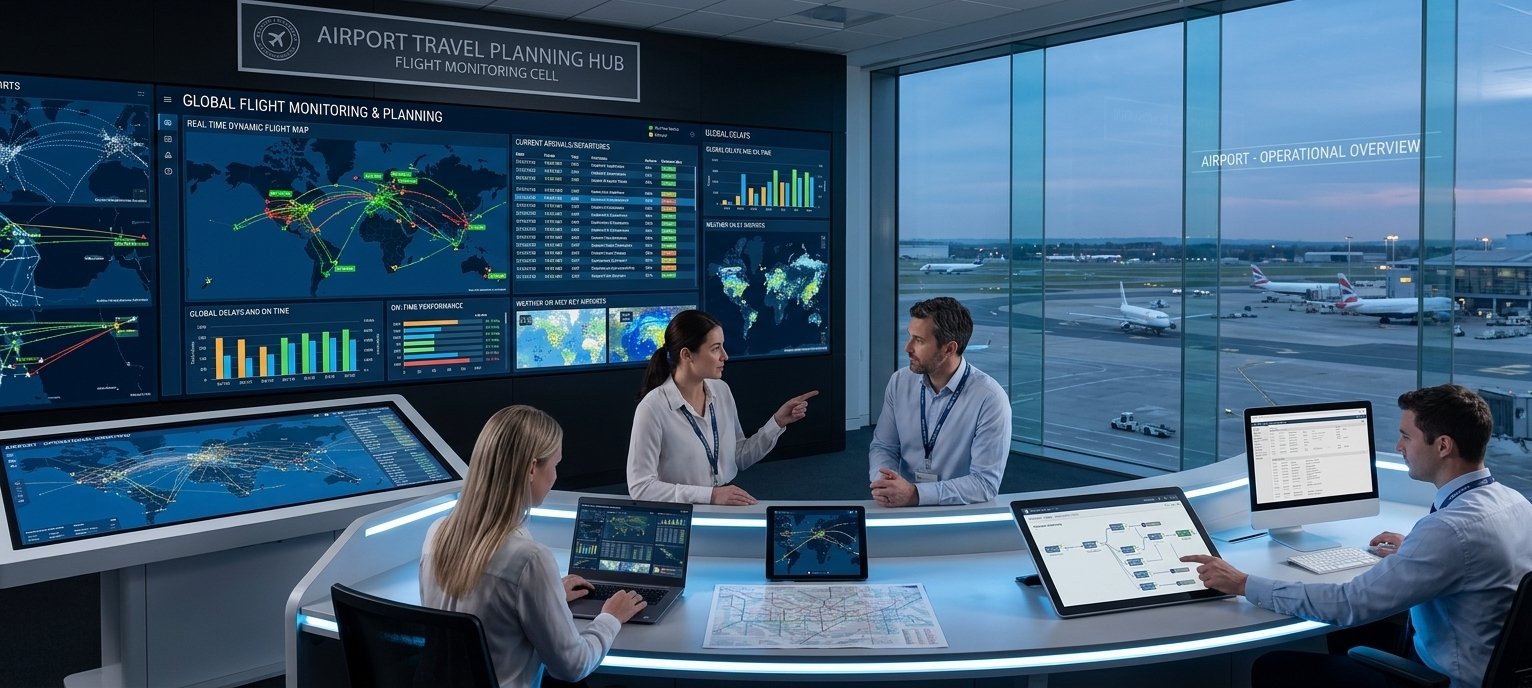
Birmingham Airport publishes live arrival and departure information, including flight status, scheduled times and updates.
Where flight monitoring is included in the chauffeur arrangement, providing the correct flight number is therefore valuable for an arriving passenger.
However, flight monitoring should not replace good travel planning. Passengers should still provide accurate booking information and allow appropriate time for immigration, baggage collection, and other airport procedures.
For arrivals, Birmingham Airport notes that baggage delivery times can vary depending on the aircraft and that passengers should collect their luggage before proceeding through customs and leaving the terminal.
Executive Airport Transfers for Business Travel in Birmingham
Birmingham is a major business destination in the West Midlands, making reliable executive travel important for visiting professionals and local companies.
A corporate airport transfer from Birmingham service can be used for:
- Airport collections for visiting executives
- Transfers between Birmingham Airport and offices
- Corporate meetings and conferences
- Hotel-to-airport journeys
- Business travel across the West Midlands
- Client transportation
- Executive travel between Birmingham and other UK destinations
For a business traveler, the airport journey can be part of a much wider itinerary. A professional chauffeur service can provide a consistent travel solution between the airport, hotel, office and meeting locations.
For corporate passengers, presentation matters too. A clean executive vehicle and professional chauffeur can provide a more suitable environment for business travel than an unplanned transport arrangement.
Choosing the Right Vehicle for Your Airport Journey
Vehicle selection should be based on more than appearance.
Think about:
- Number of passengers
- Amount of luggage
- Journey length
- Passenger comfort
- Business requirements
- Whether you need additional interior space
A smaller executive vehicle may work well for one or two business travellers with standard luggage. A larger vehicle can be more suitable for groups or passengers carrying several cases.
Link Executive Transfers provides executive vehicle options, including Mercedes-Benz E-Class, S-Class, and V-Class vehicles, allowing bookings to be matched to different passenger and luggage requirements.
Birmingham City Centre to Birmingham Airport
Passengers travelling from Birmingham city centre have several transport options, but a pre-booked private chauffeur can provide a direct journey without requiring changes between transport services.
This can be particularly convenient when travelling with luggage, attending business meetings immediately before a flight, or arranging transport for an executive guest.
The same principle applies across the wider West Midlands. A journey may begin in Birmingham, Solihull, Sutton Coldfield, Edgbaston, or another surrounding area before continuing to Birmingham Airport.
The key is to provide the correct collection address and enough notice for the journey to be planned properly.
What Makes a Luxury Airport Transfer Different?
A luxury airport transfer in Birmingham service should focus on the complete passenger experience rather than simply providing a vehicle.
The difference can be found in the details:
- A professionally presented chauffeur
- A clean and comfortable executive vehicle
- Clear booking information
- A planned pickup
- Professional communication
- Luggage assistance where appropriate
- A discreet and comfortable environment
- A journey organized around the passenger’s itinerary
At Link Executive Transfers, our chauffeur services are designed for airport travel, corporate journeys, and private travel across Birmingham and the wider UK.
Common Airport Transfer Booking Mistakes to Avoid
Even a simple airport journey can become stressful when important details are missing.
Booking Too Late
Last-minute arrangements may provide fewer vehicle choices and less flexibility. Where possible, arrange airport transportation in advance.
Providing an Incomplete Address
A street name without a house number, building name, or postcode can create unnecessary confusion.
Forgetting Flight Details
For airport arrivals, the flight number can be an important piece of information for travel planning.
Underestimating Luggage
If you are travelling with several suitcases, golf equipment, or other large items, mention this when booking so the appropriate vehicle can be considered.
Focusing Only on Price
The cheapest option is not necessarily the best option for executive travel. Consider professionalism, vehicle suitability, booking reliability, and the overall experience.
Not Checking Airport Collection Instructions
Birmingham Airport has specific arrangements for drop-offs and collections, including restrictions on stopping in designated Red Routes. Current airport guidance should always be followed.
How Early Should You Book an Executive Airport Transfer?
There is no single booking time that suits every journey.
For routine airport travel, booking as early as practical gives you more time to provide the correct details and arrange the journey around your flight.
For corporate travel, group journeys, special events, or particularly important flights, earlier planning can be beneficial because there may be more requirements to coordinate.
The most important point is to provide accurate information rather than relying on a last-minute arrangement.
Why Choose Link Executive Transfers for Birmingham Airport Travel?
Link Executive Transfers is based in Birmingham and provides professional chauffeur-driven travel across Birmingham, the West Midlands, and destinations throughout the UK.
Our service is designed around passengers who value comfort, punctuality, and a professional travel experience. Airport transfers are available alongside corporate chauffeur travel, private journeys, and other executive transport requirements.
For airport travel, the booking process starts with the practical details: your pickup point, destination, date, time, passengers, luggage, and flight information.
From there, the journey can be organized around your itinerary so that your airport transportation is one less thing to worry about.
Book Your Executive Airport Transfer in Birmingham
When your airport journey matters, professional planning makes a difference.
Whether you are travelling from Birmingham city centre, a business address in the West Midlands, or a nearby residential area, Link Executive Transfers can arrange a professional chauffeur-driven airport journey around your travel requirements.
For your next executive airport transfer in Birmingham, provide your pickup details, flight information, passenger requirements, and preferred journey time when requesting a quote.
Travel to Birmingham Airport in comfort, arrive professionally, and leave the airport journey to a dedicated chauffeur service.
Book your Birmingham airport transfer with Link Executive Transfers today.