
Business travel across the UK often means moving between airports, offices, conference venues, hotels, and meetings with very little time to spare. For executives and corporate travellers, the journey between each destination is an important part of the overall travel experience.
Choosing a professional chauffeur can make those journeys more organized and comfortable. A pre-booked executive transfer provides a dedicated vehicle and professional chauffeur for the scheduled journey, helping business travellers move between key UK destinations without relying on last-minute transport arrangements.
Based in Birmingham, Link Executive Transfers provides chauffeur-driven executive travel across Birmingham, the West Midlands, and destinations throughout the UK. Its services include airport transfers, corporate travel, long-distance journeys, and executive chauffeur services.
For businesses arranging travel for executives, clients, or visiting professionals, understanding the UK’s major business and travel destinations can also make planning easier.
Here are seven important executive transfer locations to consider when arranging business travel across the UK.
1. Birmingham—A Central Base for UK Business Travel
Birmingham is a natural starting point for nationwide executive transportation. Its central location makes it practical for business travellers who need to connect with other major cities, airports, and commercial destinations across England.
For companies based in the West Midlands, a Birmingham chauffeur service can provide door-to-door transport for meetings, corporate events, airport departures, and visiting clients.
Link Executive Transfers is based in Birmingham and provides executive chauffeur services throughout the West Midlands and across the UK. Birmingham Airport is also a key part of its airport transfer service, with journeys available to and from the airport for business and private travellers.
Birmingham Airport Executive Transfers
For early departures or arrivals at Birmingham Airport, a pre-booked chauffeur service can provide a more organized alternative to arranging transport after landing.
Link Executive Transfers offers Birmingham Airport transfers with flight tracking and meet-and-greet arrangements. The company states that airport pick-ups are monitored against actual flight arrival times, helping the chauffeur coordinate the collection.
For business travellers, this can be particularly useful when an airport arrival is followed by a meeting, conference, or onward journey.
2. London—The UK’s Major Business Destination
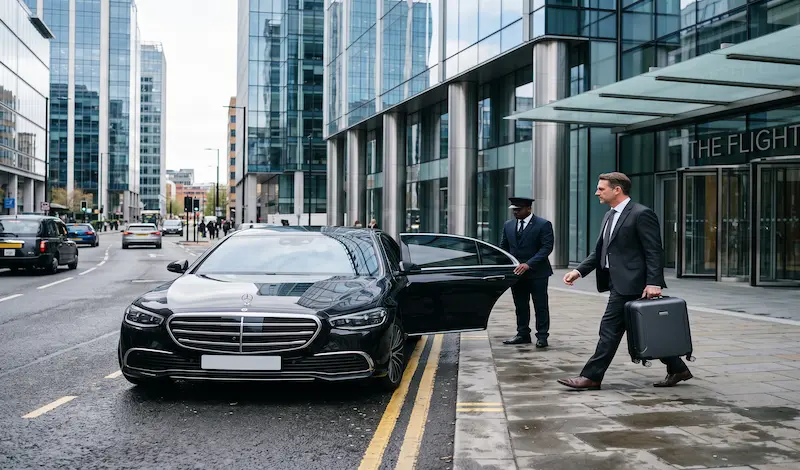
London remains one of the UK’s most important destinations for corporate travel. The capital has a substantial concentration of financial, professional, and international business activity, with the City of London continuing to operate as a major international business center.
For an executive arriving in London, the journey does not necessarily end at the airport. A typical business itinerary may involve an airport-to-city transfer followed by meetings in areas such as the City, Canary Wharf, Westminster, or other commercial districts.
This is where an executive car service in the UK can provide a practical door-to-door option.
Birmingham to London Chauffeur Travel
Travelling between Birmingham and London can involve several different arrangements depending on the business itinerary. A long-distance chauffeur service allows the traveller to remain in one private vehicle rather than changing between different forms of transport.
For companies arranging corporate transportation, this can also simplify travel planning when several stops are required during the same business trip.
Link Executive Transfers provides UK-wide executive chauffeur travel from its Birmingham base, including long-distance journeys beyond the West Midlands.
3. Manchester—A Key Northern Business Hub
Manchester is another important destination for business travellers, particularly for meetings, conferences, and commercial activity across Greater Manchester.
Manchester City Council identifies the city center’s Central Business District as a major driver of economic growth and a location for domestic and international business investment, with sectors including digital, media, technology, life sciences, and financial and professional services.
For executives travelling into Manchester, reliable ground transportation can be particularly useful when an itinerary involves Manchester Airport, hotels, offices, and multiple meetings.
Manchester Airport to Business Destinations
A UK airport chauffeur service can make the transition from the airport to a business appointment more straightforward. Rather than arranging transport after landing, travelers can have their journey pre-booked around their flight schedule.
Link Executive Transfers lists Manchester Airport among the major UK airports served from Birmingham and provides nationwide executive travel for airport and long-distance journeys.
4. Leeds – Executive Travel Across Yorkshire
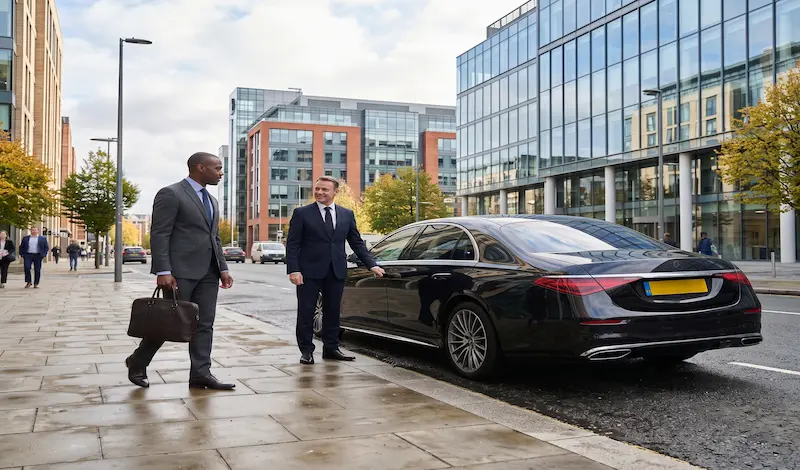
Leeds is an important destination for business travellers visiting Yorkshire for meetings, conferences, professional appointments, and corporate events.
For an executive travelling from Birmingham or another UK city, the journey may include several stages: airport arrival, hotel check-in, client meetings, and onward travel. Having a prearranged chauffeur can help keep these movements organized.
A business chauffeur service in the UK can be especially useful when the traveller needs privacy, luggage space, and a professional vehicle between multiple appointments.
Corporate Travel to Leeds
Corporate chauffeur services are not limited to airport journeys. A pre-booked executive vehicle can also be arranged for:
- Business meetings
- Client visits
- Corporate events
- Conferences
- Hotel transfers
- Multi-stop itineraries
- Long-distance UK journeys
For businesses that regularly move executives between cities, having a planned corporate travel transfer can make ground transportation easier to coordinate.
5. Liverpool – Business, Events, and City Travel
Liverpool attracts business visitors as well as leisure travelers, with a wide range of accommodation, events, venues, and commercial activity across the city region. The official VisitLiverpool destination organization provides information for visitors, accommodation, and activities across the Liverpool City Region.
For an executive arriving for a meeting or event, the final part of the journey can be just as important as the flight or train journey that preceded it.
A professional chauffeur service provides a pre-booked vehicle for the scheduled journey, making it possible to travel directly between the airport, hotel, office, or event venue.
Liverpool Executive Transfers
For business travellers, chauffeur-driven executive vehicles can be suitable for both individual journeys and planned corporate itineraries.
When travelling from Birmingham to Liverpool or between Liverpool and another UK destination, a long-distance chauffeur service can provide a private alternative for the complete journey.
6. Edinburgh – Executive Travel Across Scotland
Edinburgh is a major UK destination for business, events, tourism and professional travel. The City of Edinburgh Council maintains dedicated business services and information covering commercial property, business support, investment, and other business-related activity.
For executives travelling from England to Scotland, the distance involved makes journey planning particularly important.
A chauffeur-driven journey can be arranged as part of a wider UK itinerary, connecting airports, hotels, offices, and event venues.
Long-Distance Chauffeur Travel to Edinburgh
Long-distance chauffeur service is particularly relevant when the journey forms part of a multi-city business schedule.
Instead of treating each transfer as a separate booking, businesses can plan journeys around the complete itinerary. This can be useful when an executive needs to travel from Birmingham to Edinburgh, attend meetings, and then continue to another UK destination.
Link Executive Transfers provides nationwide chauffeur-driven travel from its Birmingham base, including long-distance UK journeys.
7. Glasgow – Corporate Travel Across Scotland
Glasgow is another significant destination for UK business travel, conferences, events, and corporate visits.
For executives travelling to Glasgow from Birmingham or other parts of the UK, arranging the ground transportation in advance can help create a more structured itinerary.
A corporate chauffeur service can connect the airport or railway station with hotels, offices, meeting venues, and other destinations without requiring the traveler to organize separate transport after arrival.
Glasgow Executive Transportation
For longer UK journeys, a professional chauffeur provides a private vehicle and dedicated driver for the scheduled trip. This can be particularly useful for executives who need to work, make calls, or prepare for meetings while travelling.
The focus is not simply on luxury. Reliable business transportation is about making the journey fit around the traveller’s schedule.
Why Birmingham Is an Important Starting Point for Executive Transfers
Birmingham has a particularly useful position for UK-wide business travel.
For a company based in the West Midlands, an executive chauffeur service can connect local offices and residential addresses with Birmingham Airport while also providing onward journeys to destinations throughout England and Scotland.
Link Executive Transfers operates from Birmingham and states that its chauffeur coverage extends across the West Midlands and nationwide throughout the UK. Its services include airport transfers, corporate accounts, weddings, events, and long-distance journeys.
This UK-wide reach means that a Birmingham-based traveller can arrange one professional chauffeur provider for different stages of a business itinerary.
What to Look for in an Executive Transfer Service
Not every business journey has the same requirements. When arranging executive transportation, consider the following points.
1. Pre-Booked Transportation
A pre-booked chauffeur service allows the journey to be arranged in advance rather than relying on last-minute availability.
2. Professional Chauffeur
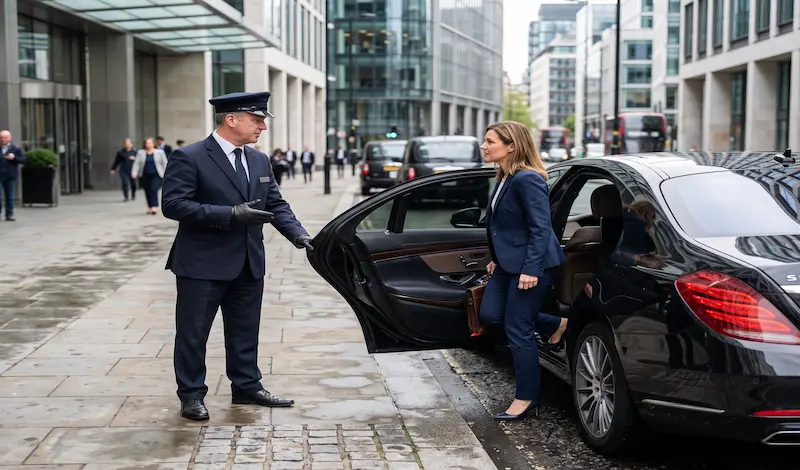
For corporate travel, presentation and professionalism matter. A chauffeur should understand the importance of punctuality, discretion and passenger comfort.
Link Executive Transfers states that its chauffeurs are DBS-checked, uniformed, and experienced with corporate and VIP clients.
3. Appropriate Executive Vehicle
The vehicle should suit the passenger numbers, luggage requirements, and nature of the journey.
Link Executive Transfers lists Mercedes-Benz E-Class, S-Class, and V-Class vehicles, with additional executive vehicle options available across its service offering.
4. Airport Flight Tracking
Airport travel can be affected by changes to flight schedules. A chauffeur service that monitors flight information can coordinate the airport collection more effectively.
Link Executive Transfers states that flight tracking is included on its airport transfers and that pick-up times can be adjusted according to actual landing times.
5. Meet and Greet
A meet-and-greet airport service can make arrival easier, particularly for first-time visitors or executives travelling with luggage.
Link Executive Transfers provides meet-and-greet arrangements at airport arrivals, with the chauffeur waiting with a name board.
6. UK-Wide Coverage
For companies with executives travelling between different cities, UK-wide coverage can simplify corporate travel planning.
Instead of arranging separate transport providers for Birmingham, London, Manchester and other destinations, a nationwide chauffeur service can provide a more consistent booking process.
Executive Airport Transfers for Business Travellers
Airport transfers are often one of the most important parts of a corporate itinerary.
A business traveller may arrive after a long international flight and need to reach a meeting, hotel, or office without unnecessary delays. A professional airport transfer provides a scheduled journey between the airport and the required destination.
Link Executive Transfers provides airport chauffeur services from Birmingham and across the UK, including major airports such as Birmingham Airport, Heathrow Airport, Gatwick Airport, and Manchester Airport.
For international business travellers, meet and greet, flight tracking, and pre-booked transportation can make the airport-to-city part of the journey easier to manage.
Corporate Chauffeur Services for Multi-City Business Travel
Business travel is increasingly about complete itineraries rather than individual journeys.
An executive may start in Birmingham, travel to London for a meeting, continue to Manchester for an event and then return to Birmingham Airport. In this situation, corporate chauffeur services can provide a planned approach to business traveler transportation.
A professional chauffeur can be used for:
- Airport-to-city transfers
- Office-to-office travel
- Client transportation
- Corporate events
- Conferences
- Hotel transfers
- Long-distance journeys
- Multi-stop business itineraries
The benefit is having the ground transportation arranged around the business schedule.
Choosing the Right Executive Transfer for Your Journey
The most suitable executive transfer depends on the itinerary.
For a Birmingham Airport departure, a scheduled airport transfer may be all that is required. For a London business trip, a long-distance chauffeur journey may be more suitable. For a multi-city corporate itinerary, businesses may benefit from arranging several transfers as part of one planned travel schedule.
The important factors are the destination, passenger numbers, luggage, timing, airport requirements, and number of stops.
Link Executive Transfers provides one-way, return, and hourly-hire booking options, allowing clients to provide journey details and vehicle requirements when requesting a quote.
Executive Transfers Across the UK with Link Executive Transfers
From Birmingham and the West Midlands to London, Manchester, Leeds, Liverpool, Edinburgh, and Glasgow, business travel often involves more than simply getting from one point to another.
A professional chauffeur service can provide a pre-booked, private journey designed around your schedule, whether you need an airport transfer, corporate transportation, a long-distance journey, or executive travel between meetings.
Link Executive Transfers is based in Birmingham and provides chauffeur-driven executive travel across the UK, with airport transfers, corporate travel, and long-distance journeys available as part of its service offering.
When your next business journey takes you across the UK, arrange your executive transfer in advance and let Link Executive Transfers handle the road journey.
Request your executive chauffeur quote today.