
Booking executive travel often means balancing high standards with practical business needs. For corporate executives and travel managers across the United Kingdom, ensuring staff and leadership access to reliable, tailored corporate car hire is now fundamental to smooth business operations. As expectations around professionalism and convenience evolve, choosing the right provider unlocks flexible mobility, enables cost management, and safeguards compliance with company travel policies while offering a premium travel experience for every business event.
Table of Contents
- Defining Corporate Car Hire For Businesses
- Main Types Of Corporate Car Hire Solutions
- How Corporate Car Hire Agreements Work
- Key Costs, Tax Considerations And Legal Duties
- Comparing Car Hire With Purchase And Leasing Options
Key Takeaways
| Point | Details |
|---|---|
| Corporate Car Hire Enhances Mobility | Businesses can optimise workforce mobility and efficiency through flexible transportation solutions tailored to their needs. |
| Cost Management is Essential | Effective corporate car hire agreements help organisations manage operational costs while ensuring compliance with travel policies. |
| Diverse Procurement Options Available | Different vehicle acquisition methods offer distinct advantages, and companies should assess their operational needs before making a decision. |
| Focus on Sustainability | Transitioning to electric and hybrid vehicles is becoming a priority for many organisations, reflecting both environmental and regulatory pressures. |
Defining Corporate Car Hire for Businesses
Corporate car hire is a strategic transportation solution where businesses rent vehicles for professional purposes, designed to enhance workforce mobility and operational efficiency. Corporate vehicle procurement strategies enable organisations to access flexible transportation resources that support diverse business needs.
The core purpose of corporate car hire extends beyond simple vehicle rental. It involves creating a comprehensive mobility framework that addresses multiple organisational requirements:
- Providing flexible transportation for employees
- Supporting business travel requirements
- Managing operational costs effectively
- Ensuring professional and reliable workforce movement
- Maintaining compliance with corporate travel policies
Businesses leverage these services to optimise their transportation strategies, recognising that efficient mobility directly impacts productivity. By selecting appropriate corporate car hire solutions, companies can reduce operational expenses while providing staff with convenient, professional travel options.
Unlike personal car rentals, corporate car hire involves negotiated contracts, specialised insurance coverage, and tailored service agreements. These arrangements typically include comprehensive benefits such as:
- Preferential corporate rates
- Flexible rental periods
- Dedicated account management
- Streamlined booking processes
- Consistent vehicle quality standards
Pro tip: When implementing a corporate car hire programme, develop clear usage guidelines and track vehicle utilisation to maximise cost-effectiveness and efficiency.
Main Types of Corporate Car Hire Solutions
Corporate car hire encompasses several strategic transportation solutions designed to meet diverse business mobility requirements. Corporate vehicle rental options range from short-term arrangements to long-term leasing strategies, providing organisations with flexible and comprehensive mobility solutions.
The primary types of corporate car hire solutions include:
- Short-term Business Trip Rentals: Ideal for temporary travel needs, typically ranging from a few days to several weeks
- Long-term Vehicle Leasing: Comprehensive solutions for sustained mobility, often spanning months or years
- Executive Premium Hire: High-end vehicles specifically tailored for senior leadership and critical business engagements
- Pool Vehicle Services: Shared corporate vehicles managed centrally for multiple departmental uses
- Specialised Fleet Management: Customised vehicle solutions with dedicated maintenance and replacement protocols
Sustainable corporate mobility solutions are increasingly becoming a priority, with many organisations transitioning towards electric and hybrid vehicle options. This shift reflects both environmental considerations and emerging regulatory requirements across European markets.
Modern corporate car hire solutions go beyond simple vehicle provision. They now incorporate comprehensive service packages that include:
This table summarises the core business impacts of key features often included in modern corporate car hire services:
| Feature | Business Impact | Strategic Benefit |
|---|---|---|
| Integrated insurance | Reduces liability risk | Enhances compliance and security |
| Maintenance support | Minimises downtime | Ensures workforce reliability |
| GPS tracking | Enables route optimisation | Improves cost and time efficiency |
| Sustainability reporting | Monitors emissions | Supports CSR and regulation needs |
| Flexible booking platforms | Eases reservation management | Improves user experience |
- Integrated insurance coverage
- Maintenance and breakdown support
- GPS and technological tracking systems
- Flexible booking and management platforms
- Sustainability reporting and carbon footprint monitoring
Pro tip: Conduct a thorough analysis of your organisation’s specific mobility requirements before selecting a corporate car hire solution to ensure optimal cost-effectiveness and operational efficiency.
How Corporate Car Hire Agreements Work
Corporate car hire agreements form complex legal frameworks that govern vehicle rental arrangements between businesses and transportation providers. Corporate vehicle rental contracts establish comprehensive guidelines defining usage parameters, financial responsibilities, and operational expectations for organisational mobility needs.
The key components of these agreements typically include:
- Pricing Structures: Negotiated rates and potential volume discounts
- Usage Limitations: Specific terms regarding vehicle deployment and restrictions
- Insurance Provisions: Comprehensive coverage details and liability protections
- Eligibility Criteria: Defined user permissions and authentication protocols
- Maintenance Responsibilities: Allocation of vehicle upkeep and servicing obligations
Contract management protocols play a critical role in ensuring these agreements remain effective and aligned with organisational objectives. Businesses typically designate specialised procurement or travel management teams responsible for:
- Initial contract negotiation
- Ongoing performance monitoring
- Periodic contract reviews
- Renewal and renegotiation processes
- Compliance verification
Strategic contract design is essential for maximising value and minimising potential risks. Organisations must carefully evaluate rental providers based on factors such as fleet quality, service reliability, technological capabilities, and overall cost-effectiveness.

Pro tip: Develop a comprehensive internal checklist that covers all critical aspects of corporate car hire agreements to ensure thorough evaluation and optimal vendor selection.
Key Costs, Tax Considerations and Legal Duties
Corporate car hire involves complex financial and legal considerations that organisations must carefully navigate. Tax implications for vehicle expenses require meticulous documentation and strategic planning to ensure compliance and optimal cost management.
The primary cost components of corporate car hire include:
- Rental Fees: Base charges for vehicle usage
- Insurance Premiums: Comprehensive coverage for potential incidents
- Fuel Expenses: Actual consumption and reimbursement mechanisms
- Maintenance Charges: Routine servicing and unexpected repair costs
- Additional Service Fees: GPS, driver support, and supplementary services
Business ethical considerations play a crucial role in managing corporate vehicle hire responsibilities. Legal duties encompass multiple dimensions:
- Ensuring vehicle safety standards
- Maintaining proper licensing documentation
- Adhering to motor vehicle regulations
- Implementing transparent cost management practices
- Verifying driver eligibility and qualifications
Tax considerations require businesses to understand complex reimbursement guidelines, distinguishing between deductible business expenses and potential fringe benefits. Organisations must develop robust internal processes to track, validate, and report vehicle-related expenditures accurately.
Pro tip: Establish a comprehensive tracking system that automatically categorises vehicle expenses to simplify tax reporting and ensure regulatory compliance.
Comparing Car Hire with Purchase and Leasing Options
Corporate mobility strategies require careful evaluation of vehicle acquisition methods. Comparative vehicle financing approaches reveal distinct advantages and limitations for organisations seeking flexible transportation solutions.
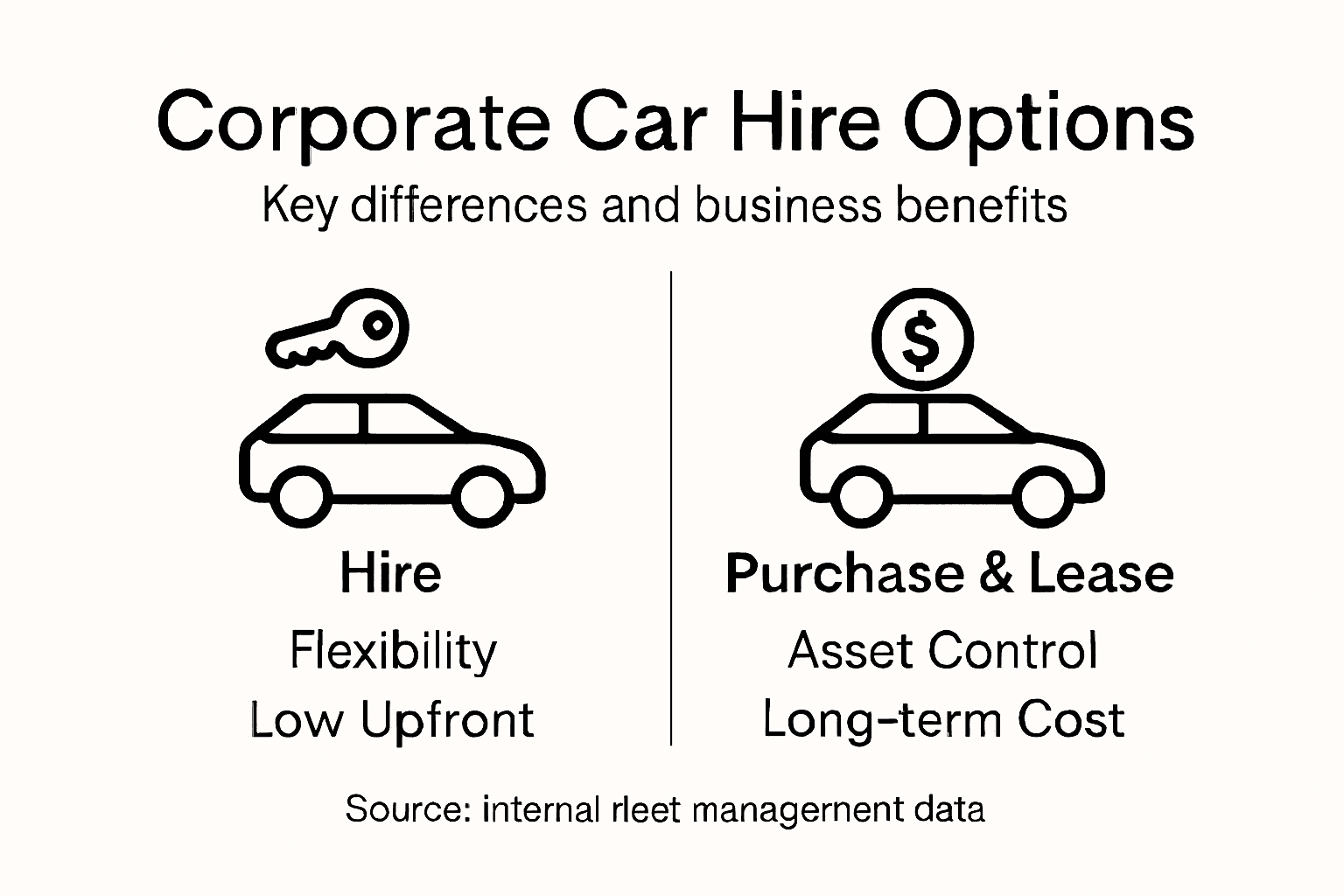
The primary options for corporate vehicle procurement include:
The following table highlights the main differences between common corporate vehicle acquisition methods:
| Procurement Method | Ownership Implications | Cost Predictability | Typical Use Case |
|---|---|---|---|
| Car Hire | No ownership; flexible use | High (short-term focused) | Short trips, project hires |
| Vehicle Purchase | Full company ownership | Depreciation risk present | Long-term operational transport |
| Financial Leasing | Eventual ownership option | Fixed payments, length varies | Budgeted asset accumulation |
| Operational Leasing | Returns vehicle after term | Predictable monthly costs | Medium-term flexible solutions |
| Hire Purchase | Ownership after payments | Structured, incremental | Planned asset investment |
- Car Hire: Short-term, flexible access without ownership responsibilities
- Vehicle Purchase: Complete ownership with long-term asset investment
- Financial Leasing: Structured periodic payments with potential ownership transfer
- Operational Leasing: Temporary vehicle use with maintenance included
- Hire Purchase: Incremental ownership through structured payment plans
Financial lease mechanisms demonstrate nuanced differences in corporate asset management. Each approach presents unique financial implications:
- Immediate capital investment requirements
- Tax deductibility considerations
- Maintenance and depreciation risks
- Operational flexibility
- Long-term financial planning impacts
Businesses must carefully assess their specific operational needs, budget constraints, and strategic objectives when selecting the most appropriate vehicle procurement method. Factors such as employee travel frequency, budget flexibility, and technological upgrade requirements play crucial roles in decision-making.
Pro tip: Conduct a comprehensive cost-benefit analysis that includes total ownership expenses, not just initial procurement costs, when comparing vehicle acquisition strategies.
Elevate Your Corporate Car Hire Experience with Premium Chauffeur Services
If your business is seeking reliable and sophisticated solutions to address corporate mobility challenges such as flexible vehicle access, impeccable service quality, and streamlined travel arrangements, discover how luxury chauffeur-driven vehicles can redefine your executive travel. Recognising the importance of punctuality, discretion, and comfort, our fleet offers high-end options that complement the strategic goals of corporate car hire agreements, ensuring seamless and professional transportation for business trips, executive meetings, and special events.

Choose customised chauffeur services designed to enhance operational efficiency and elevate your corporate image. Act now to secure premium transportation featuring Mercedes-Benz S-Class, E-Class, and V-Class vehicles operated by trained professionals committed to delivering exceptional experiences across Birmingham and the West Midlands. Visit Link Executive Transfers today and transform your corporate travel into a hallmark of sophistication and reliability.
Frequently Asked Questions
What is corporate car hire?
Corporate car hire is a transportation solution where businesses rent vehicles for professional use, enhancing workforce mobility and supporting operational efficiency.
What are the main types of corporate car hire solutions available?
The main types include short-term business trip rentals, long-term vehicle leasing, executive premium hire, pool vehicle services, and specialised fleet management.
How do corporate car hire agreements work?
Corporate car hire agreements outline the pricing structures, usage limitations, insurance provisions, eligibility criteria, and maintenance responsibilities, governed by negotiated contracts between businesses and rental providers.
What are the key cost considerations for businesses using corporate car hire?
Key cost components include rental fees, insurance premiums, fuel expenses, maintenance charges, and any additional service fees associated with the rental agreement.